
Three Weinberg faculty help lead national push for AI-powered science
Omar Farha, Ted Sargent, and Ian Low are part of the Genesis Mission, a U.S. Department of Energy effort to accelerate scientific discovery with AI.
At Weinberg College, we study AI the way we study everything worth knowing: rigorously, curiously, and critically. From cognition to the cosmos, we're asking what AI reveals, what it asks of us, and how to keep people at its center.
Two cross-departmental initiatives bringing an AI lens to the humanities and cognitive sciences at Weinberg College.
The AIMS Initiative uses AI and machine learning to fuel research and teaching in linguistics, neurobiology, philosophy, and psychology — not just applying better tools to old questions about the mind, but opening up entirely new ones.
Launching fall 2026, the HumAIn Initiative brings historians, philosophers, and literary scholars into direct conversation with AI's fastest-moving questions — through public talks, a book club, conferences, and new curriculum on what it means to be human alongside intelligent machines.
The humanities are tasked with centrally examining what it means to be human, and this is the domain of the biggest questions AI is forcing everyone to address.”
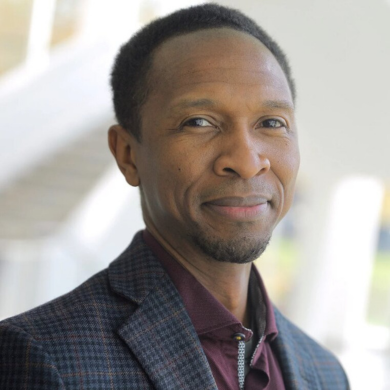
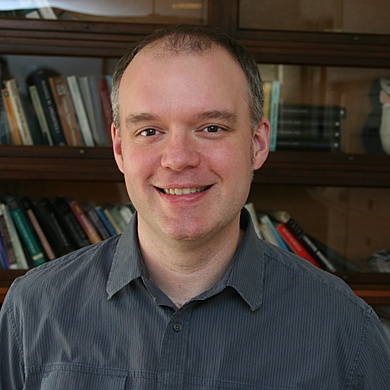


I just want to solve hard problems. People feel like they’re getting personal leverage from technological advancements. This requires researching what problems can be solved using AI to sort through noise, while leaving humans as the principal architects.”
Curious what AI looks like in a Weinberg College classroom? Explore a sampling of courses from across the disciplines.
In this Political Science College Seminar, first-year students use AI to test Machiavelli's political theory against his own diplomatic letters — a research project once reserved for advanced scholars.

Weinberg College researchers are also helping lead AI work that lives outside the College itself.

By advancing research and training the next generation of leaders, Northwestern is ensuring that it remains a global powerhouse across all disciplines as they transform in the age of AI.”
What does "progress" really mean — and is AI its next chapter, or something else entirely? Grounded in Steven Pinker's Enlightenment Now, this seminar traces the sources of economic and scientific progress across centuries, then turns that same lens on artificial intelligence. Discussion topics evolve with student interest, but the question at the center stays the same: what happens when computers can think — or seem to?
Artificial intelligence is not new — long before the term was coined in 1955, engineers and inventors sought to mechanize human thought and behavior. This course traces the chronological arc of AI from eighteenth-century automatons to today's large language models, examining how changing conceptions of human intelligence and creativity shaped its development, and engaging in debates over the problems and possibilities of machine sentience.
This course traces a century of American anxiety about robots — from early cinema's clanking "mechanical men" to today's fights over generative AI — through fiction by Asimov and Philip K. Dick, films like The Iron Giant, and the legal battles over self-driving cars and AI-made art. By the end, the question isn't just what we fear about robots, but what that fear reveals about us.
This seminar introduces first-year students to the foundations of AI — how machines learn, where they're already changing industries and daily life, and the ethical questions that come with that power. No technical background required, just curiosity about what it means to think and live in an AI-shaped world.
What does it take to build an AI system that doesn't just answer a question, but actually plans, acts, and learns from what happens next? This advanced course explores modern approaches to building autonomous AI agents and agentic systems, covering agent architectures, planning and reasoning, reinforcement learning, multi-agent systems, and tool use and memory. Students combine conceptual study with hands-on projects, culminating in a final project implementing an autonomous agent system for a real-world application.
Through smartphones, social media, and large language models, our everyday lives generate digital traces that governments, companies, and scientists now use to make decisions that shape our lives. This seminar weighs the promise of algorithmic decision-making — better health, education, and efficiency — against its risks to fairness, autonomy, and self-determination.
This course introduces the foundational ideas of artificial intelligence and cognitive science — knowledge representation, analogy, reasoning, language understanding, and even emotion and consciousness — through hands-on work with AI software. No programming experience needed: the goal is to think like a cognitive scientist, not to code like one.
This course dives into the linear algebra underneath modern machine learning — matrix factorizations, singular value decomposition, and principal component analysis — then extends those same tools to graphs, using spectral methods and graph Laplacians to uncover patterns and clusters in connected data. Next offered Winter 2027.
Generative AI can draft, brainstorm, and revise — but knowing when to lean on it and when to override it is a skill of its own. This course teaches students to use Gen AI critically and responsibly across the writing process, while examining its ethical pitfalls and its limits on accuracy and credibility. Students finish by researching how Gen AI is already reshaping communication in the career field they're headed toward — from business to healthcare to journalism.
As algorithms increasingly shape hiring, lending, and policy decisions, what exactly are they learning from — and what should that mean for how we regulate them? This course builds a theoretical toolkit for thinking through the stakes of predictive data use, moving from how individuals learn from information, to how people respond strategically to algorithms, to the broader market and policy consequences of a data-driven world.
This course introduces the core methods of machine learning, from regression and classification to clustering, with an emphasis on the statistical reasoning behind why these techniques work and how to evaluate them rigorously.
MATH 364 treats neural networks as mathematical objects, developing rigorous proofs around how architecture shapes expressive power and training behavior — from the Universal Approximation Theorem to the structure of attention mechanisms. A proof-based course, not a coding course.